What Is a Design Audit and Why SaaS Teams Need It

Most mid-sized SaaS teams overlook that a single design inconsistency can reduce conversions by over 20 percent, even in competitive American markets. For product managers and founders, ensuring a seamless user experience is not just a technical goal but a growth catalyst. Understanding how a robust design audit uncovers friction and aligns every product touchpoint with evolving customer expectations can mean the difference between stagnation and sustained success.
Table of Contents
- Defining A Design Audit For SaaS Products
- Types Of Design Audits And Key Differences
- Core Steps In The Design Audit Process
- Common Mistakes To Avoid In Design Audits
- Benefits, Risks, And Costs In SaaS Context
Key Takeaways
| Point | Details |
|---|---|
| Importance of Design Audits | Design audits evaluate SaaS product design elements and user experience to identify improvement opportunities. |
| Audit Types Overview | Various design audits focus on visual consistency, usability, and accessibility, addressing specific user experience aspects. |
| Engagement of Stakeholders | Involving diverse stakeholders is crucial to ensure comprehensive insights and address all design challenges effectively. |
| Investment vs. ROI | While design audits have associated costs, their potential return on investment can lead to improved user retention and revenue generation. |
Defining a Design Audit for SaaS Products
A design audit represents a comprehensive evaluation process that systematically examines a digital product’s design elements, user interfaces, and overall user experience. In the context of SaaS products, this strategic assessment helps teams uncover potential design inconsistencies, usability challenges, and opportunities for improvement. Design audits in user experience focus on thoroughly examining digital interfaces to ensure they align with brand objectives and meet evolving user expectations.
The core purpose of a design audit goes beyond surface-level aesthetic review. It involves a meticulous analysis of multiple design components, including visual consistency, interaction patterns, navigation structures, and user flow effectiveness. SaaS product teams conduct these audits to identify friction points that might impede user engagement, understand how well their current design supports key user journeys, and develop targeted strategies for enhancing overall product experience.
Typically, a design audit encompasses several critical evaluation areas. These include visual design consistency, information architecture, user interface responsiveness, accessibility standards, brand alignment, and performance metrics. By systematically reviewing these aspects, SaaS teams can transform potential design weaknesses into strategic opportunities for product refinement. The audit provides a structured approach to understanding how design impacts user perception, engagement, and ultimately, product success.
Pro tip: Start your design audit by creating a comprehensive checklist that covers visual, functional, and experiential design elements to ensure a thorough and objective assessment.
Types of Design Audits and Key Differences
SaaS teams typically engage in multiple design audit categories, each serving a distinct strategic purpose. A comprehensive guide to UX audits reveals several specialized approaches that address different aspects of product design and user experience. These audit types range from surface-level visual assessments to deep, holistic evaluations that examine the entire user interaction ecosystem.
The primary design audit types include visual design audits, which focus on aesthetic consistency and brand alignment, and functional design audits that analyze user interaction patterns, navigation structures, and interface responsiveness. Usability design audits dive deeper, examining how effectively users can complete critical tasks within the product, identifying potential friction points, and recommending specific improvements to enhance user experience. Performance design audits complement these approaches by evaluating technical aspects like page load times, interaction responsiveness, and overall system efficiency.

Beyond these core categories, specialized design audits emerge for specific contexts. Accessibility design audits ensure products meet diverse user needs, examining how well interfaces accommodate users with different abilities. Brand consistency audits analyze whether design elements maintain a cohesive identity across various touchpoints, while conversion-focused design audits specifically target improving user engagement and reducing drop-off rates. Each audit type offers unique insights, helping SaaS teams systematically improve their product’s design and user experience.
Below is a summary of common types of design audits and their primary focus areas:
| Audit Type | Main Purpose | Key Focus Area |
|---|---|---|
| Visual Design Audit | Ensure visual unity and branding | Color, typography, iconography |
| Functional Design Audit | Improve interactions and flow | Navigation, buttons, logic |
| Usability Design Audit | Optimize task completion and ease | User flows, task obstacles |
| Performance Design Audit | Enhance speed and responsiveness | Load times, interface latency |
| Accessibility Design Audit | Support diverse user needs | Contrast, keyboard navigation |
| Brand Consistency Audit | Maintain unified brand identity | Logo usage, messaging tone |
| Conversion Audit | Maximize engagement and reduce churn | Signup, onboarding, CTAs |
Pro tip: Rotate between different audit types quarterly to maintain a comprehensive and dynamic approach to product design improvement.
Core Steps in the Design Audit Process
The design audit process begins with systematically mapping the entire experience ecosystem, which involves a comprehensive examination of user touchpoints, interactions, and potential design friction areas. This initial step requires assembling a cross-functional team that includes designers, developers, product managers, and key stakeholders who can provide diverse perspectives on the product’s design landscape.
Once the team is assembled, the audit proceeds through several critical phases. These typically include a detailed inventory of existing design elements, comprehensive interface documentation, and a thorough review of current user interaction patterns. Teams conduct in-depth assessments of visual consistency, evaluating how design components align with brand guidelines, user interface responsiveness, and overall aesthetic coherence. This phase also involves analyzing cognitive load, examining how easily users can navigate and comprehend the product’s interface and functionality.
The subsequent stages focus on synthesizing findings and developing actionable recommendations. This involves prioritizing identified design inconsistencies, creating implementation roadmaps, and establishing clear metrics for measuring design improvement effectiveness. Advanced design audits now incorporate regenerative design principles, which extend beyond traditional usability metrics to consider broader impact factors like ecological sustainability and ethical design considerations. The goal is not just incremental improvement but a holistic reimagining of the user experience that balances aesthetic, functional, and systemic design considerations.
Pro tip: Create a standardized design audit scorecard that allows objective, repeatable evaluation of design elements across different product iterations and touchpoints.
Common Mistakes to Avoid in Design Audits
One of the most critical errors in design audits is failing to involve all relevant stakeholders, which can significantly undermine the audit’s comprehensive effectiveness. When design teams operate in isolation, they miss crucial perspectives from developers, product managers, customer support representatives, and other key organizational members who interact with the product from different angles. This narrow approach can lead to superficial assessments that overlook fundamental design challenges and potential improvement opportunities.
Another prevalent mistake involves setting an unfocused or overly broad audit scope. SaaS teams often make the error of attempting to review every single design element simultaneously, which results in diluted insights and overwhelming recommendations. Successful design audits require strategic targeting, concentrating on specific user journeys, critical interface components, or problematic interaction points that directly impact user experience and product performance. This focused approach allows teams to generate actionable, high-impact recommendations rather than generic, ineffective suggestions.
Neglecting accessibility standards and overlooking quantitative user data represent additional significant pitfalls in design audits. Many organizations conduct audits without thoroughly examining how their design accommodates users with diverse abilities or without integrating comprehensive user behavior analytics. This oversight can lead to design recommendations that fail to address genuine user needs, potentially alienating significant user segments and undermining the product’s overall usability. Effective design audits must incorporate both qualitative user feedback and quantitative performance metrics to create truly user-centric design strategies.
Pro tip: Develop a standardized design audit checklist that includes explicit criteria for stakeholder involvement, accessibility compliance, and data-driven insights to ensure comprehensive and actionable assessments.
Benefits, Risks, and Costs in SaaS Context
Design audits represent a strategic investment for SaaS teams, offering substantial benefits while simultaneously presenting nuanced financial and organizational challenges. Understanding user experience priorities is crucial in evaluating the comprehensive value of these assessments. The primary benefits include identifying design inefficiencies, reducing long-term development costs, improving user retention, and creating a more cohesive product experience that can directly impact revenue generation.
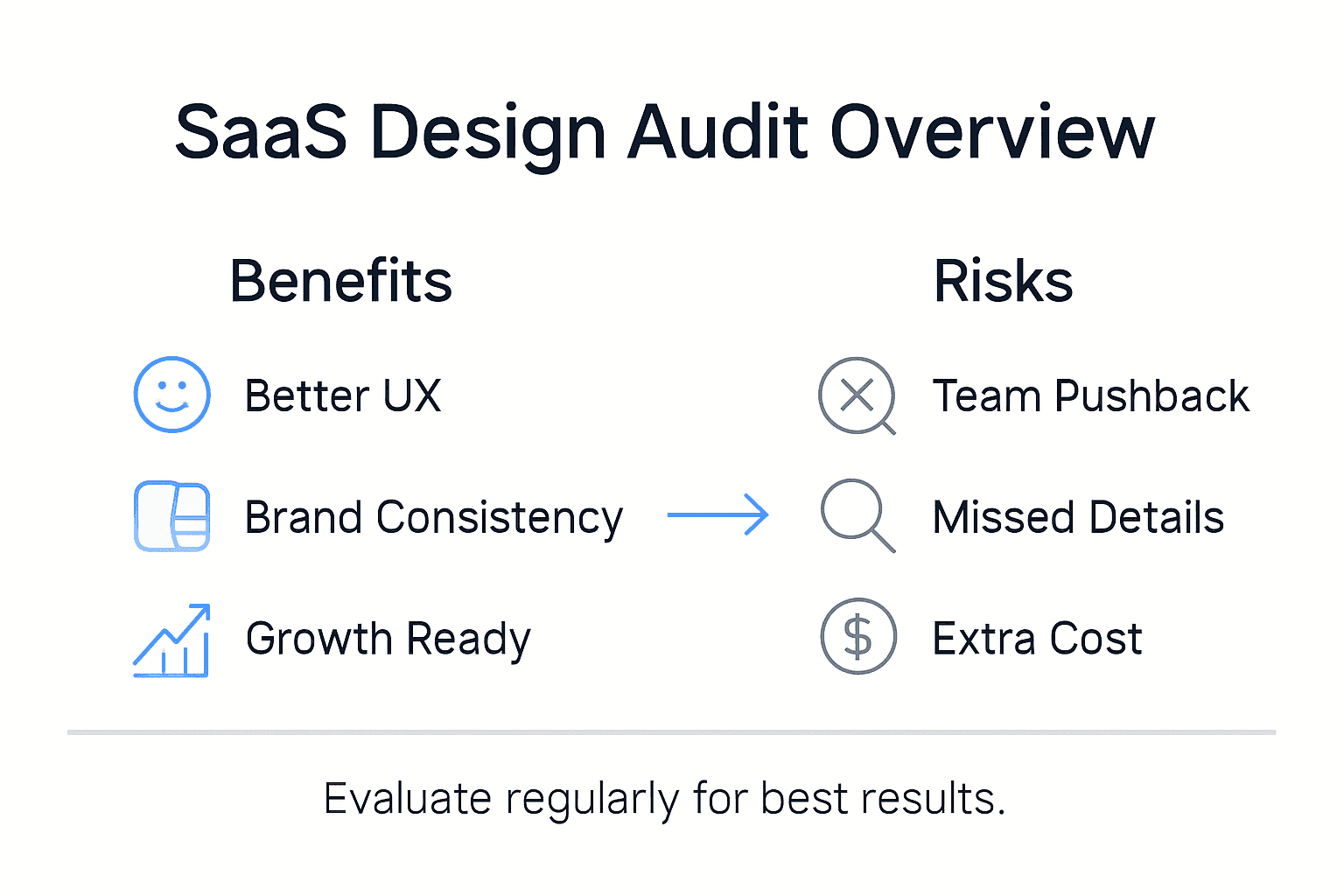
The financial considerations of design audits are multifaceted. Short-term costs typically range from $5,000 to $25,000 depending on product complexity, team size, and audit depth. These expenses include professional time, potential external consultant fees, and internal resource allocation. However, the potential return on investment can be substantial, with successful design optimizations demonstrating measurable improvements in user conversion rates, reduced customer support interactions, and enhanced product adoption metrics that can offset initial audit expenses.
Here is a comparative table summarizing the financial aspects of SaaS design audits:
| Cost Factor | Estimated Range | Impact on SaaS Team |
|---|---|---|
| Internal Time Investment | Varies (20-60+ hrs) | Affects team bandwidth |
| Consultant Fees | $5,000 - $25,000 | Adds upfront expense |
| Resource Allocation | 1-3 team members | Can slow other projects |
| ROI Potential | High, if well-executed | Improves retention and revenue |
Risks associated with design audits primarily stem from implementation challenges and potential organizational resistance. Some teams might perceive the audit as criticism of existing work, leading to defensive responses that can undermine the process. Additionally, without proper change management, audit recommendations might remain theoretical rather than becoming actionable improvements. Successful SaaS teams mitigate these risks by fostering a collaborative environment, maintaining transparent communication, and creating clear implementation roadmaps that transform design insights into tangible product enhancements.
Pro tip: Allocate a dedicated budget percentage for design audit implementation to ensure recommendations translate into actual product improvements.
Elevate Your SaaS Product with a Strategic Design Audit
Struggling with fragmented user journeys or inconsistent interfaces can hold your SaaS product back from its full potential. This article highlights how a thorough design audit uncovers hidden issues like usability hurdles, visual inconsistencies, and lack of accessibility—challenges that directly impact user activation and retention. A focused design audit is essential to align your product with your brand and user needs, turning friction points into growth opportunities.
The Good Side Oy specializes in empowering SaaS teams through expert design audits that do not just identify problems but deliver clear, actionable roadmaps for improvement. Whether you face difficulties in maintaining brand consistency, optimizing onboarding flows, or boosting conversion rates, our senior designers provide hands-on UI/UX design, user research, and strategic positioning tailored to your specific challenges. We offer flexible engagement models to integrate seamlessly with your team and rapidly scale support.
Discover how our process starts with a comprehensive design audit to spotlight critical issues—and fast-track your product to a unified, high-performing experience that drives results.
Learn How Our Strategic Design Services Can Help
Start Your Free Design Audit Today
Frequently Asked Questions
What is a design audit?
A design audit is a thorough evaluation of a digital product’s design elements, user interfaces, and user experience to identify inconsistencies, usability challenges, and areas for improvement.
Why do SaaS teams need a design audit?
SaaS teams need a design audit to uncover friction points in user engagement, ensure their design aligns with brand objectives, and enhance overall product experience through targeted strategies.
What are the different types of design audits?
The different types of design audits include visual design audits, functional design audits, usability design audits, performance design audits, accessibility design audits, brand consistency audits, and conversion audits, each focusing on specific aspects of design and user experience.
What are the common mistakes to avoid during a design audit?
Common mistakes in design audits include failing to involve all relevant stakeholders, setting an unfocused audit scope, neglecting accessibility standards, and overlooking quantitative user data, which can undermine the effectiveness of the audit.