Role of Research in Design for SaaS Success

Most American SaaS companies underestimate the impact of thorough design research, even though studies show that user-centered products see up to 60 percent greater adoption rates. In a crowded software market, understanding actual user behaviors and needs is the difference between a forgettable tool and a product users rely on daily. This guide breaks down how effective research transforms the design process, driving better user experiences and lasting product success.
Table of Contents
- Defining Research In The Design Process
- Types Of Research: Qualitative Vs. Quantitative
- How Research Shapes SaaS Product Design
- Research-Driven Improvements In UI And UX
- Common Mistakes: Misusing Or Skipping Research
Key Takeaways
| Point | Details |
|---|---|
| Research is Essential for User-Centered Design | Systematic research transforms intuitive design into user-focused solutions, ensuring products meet genuine user needs and market demands. |
| Combine Qualitative and Quantitative Methods | Integrating both types of research provides a comprehensive understanding of user experiences, enhancing the design process and product effectiveness. |
| Continuous Feedback is Crucial | Iterative testing and user feedback loops help refine products and align them with evolving user expectations, ensuring superior user experiences. |
| Avoid Research Negligence | Prioritizing assumptions over systematic research can lead to products that do not resonate with users, wasting resources and jeopardizing user satisfaction. |
Defining Research in the Design Process
Research is the strategic foundation that transforms intuitive design into a precise, user-centered approach for SaaS products. At its core, design research is an investigative process that systematically explores user needs, behaviors, and pain points to inform product development decisions. By leveraging empirical insights, designers can create solutions that are not just aesthetically pleasing, but fundamentally aligned with user expectations and market demands.
In the context of SaaS design, research encompasses multiple methodological approaches. This includes qualitative techniques like user interviews, contextual inquiry, and ethnographic studies that provide deep narrative insights into user experiences. Quantitative methods such as surveys, analytics tracking, and A/B testing complement these approaches by delivering measurable data points that validate or challenge initial design hypotheses. Computational theories of design creativity further demonstrate how systematic research can unify diverse design methodologies into comprehensive frameworks that drive innovation.
Effective design research goes beyond surface-level observations. It requires a nuanced understanding of user motivations, technological constraints, and business objectives. Designers must develop robust research protocols that capture genuine user perspectives while maintaining objectivity. This involves creating structured interview guides, designing unbiased survey instruments, and implementing rigorous data collection and analysis techniques. By integrating strategic design research methods, SaaS teams can transform raw user insights into actionable design strategies that differentiate their products in competitive markets.
Critical research techniques for SaaS design include user persona development, journey mapping, usability testing, and iterative prototype evaluation. These methods enable designers to create products that not only solve immediate user problems but also anticipate future needs. The ultimate goal is to develop design solutions that feel intuitive, reduce cognitive load, and provide seamless user experiences that drive engagement and product adoption.
Types of Research: Qualitative vs. Quantitative
In SaaS design, research methodologies can be broadly categorized into qualitative and quantitative approaches, each offering unique insights into user experiences and product performance. Qualitative research focuses on understanding deeper contextual meanings, exploring user motivations, emotions, and complex behavioral patterns through narrative-rich methods like interviews, observations, and focus groups. These techniques provide nuanced insights that numerical data cannot capture, revealing the intricate psychological factors driving user interactions.
Longitudinal case study research methodologies demonstrate the power of qualitative approaches in capturing evolving user experiences over time. By contrast, quantitative research relies on numerical data, statistical analysis, and measurable metrics to validate hypotheses and track specific performance indicators. This approach includes surveys, A/B testing, usage analytics, and conversion rate measurements that provide objective, reproducible insights into user behaviors and product effectiveness.
The most robust SaaS design research strategies integrate both qualitative and quantitative methods. Iterative development techniques showcase how combining these approaches can create a comprehensive understanding of user needs. For instance, qualitative user interviews might reveal underlying pain points, while quantitative analytics can confirm the prevalence and impact of those issues. This mixed-methods approach enables designers to develop data-driven solutions that are both empathetically designed and statistically validated.
Understanding the strengths of each research type allows SaaS teams to craft more effective design strategies. Qualitative research excels at exploring the ‘why’ behind user behaviors, uncovering emotional responses and complex interaction patterns. Quantitative research, meanwhile, provides the ‘what’ and ‘how much’ through precise measurements. By strategically combining these approaches, designers can create products that are not just functional, but truly resonant with user expectations and needs.
How Research Shapes SaaS Product Design
Research-driven design transforms SaaS product development from a guessing game into a strategic, user-centric approach. By systematically gathering and analyzing user insights, design teams can create products that solve genuine problems, anticipate user needs, and deliver exceptional experiences. This approach goes beyond aesthetic considerations, focusing on developing solutions that are both functionally robust and intuitively aligned with user expectations.

Research-based design processes emphasize continuous prototype development, creative solution generation, and iterative testing. This methodology allows SaaS companies to evolve their products dynamically, responding to user feedback and changing market demands. Contextual inquiry methods play a crucial role in this approach, enabling designers to observe users directly in their work environments and uncover nuanced insights that traditional research methods might miss.
The impact of research on SaaS product design extends far beyond initial product conception. Why user research matters fundamentally shifts how teams understand and address user challenges. By capturing detailed user journeys, pain points, and behavioral patterns, designers can create interfaces that feel intuitive and seamless. This approach transforms product development from a technology-driven process to a human-centered strategy that prioritizes user experience and satisfaction.
Successful SaaS design research involves multiple interconnected strategies. These include user interviews, usability testing, analytics tracking, and continuous feedback loops. Each research method provides a different lens through which designers can understand user needs. The goal is not just to create a functional product, but to develop a solution that feels like it was custom-designed for each user’s specific workflow and challenges. By embracing research as a core design principle, SaaS companies can create products that are not just tools, but essential, intuitive partners in their users’ professional success.
Research-Driven Improvements in UI and UX
Research-driven UI and UX improvements represent a systematic approach to transforming digital interfaces from functional tools to intuitive, user-centered experiences. By integrating empirical insights and user behavioral data, SaaS design teams can create interfaces that not only meet technical requirements but also anticipate and solve user challenges before they become friction points. This approach moves beyond aesthetic considerations, focusing on creating digital experiences that feel natural, efficient, and deeply aligned with user mental models.
Reflective transformative design methodologies provide a critical framework for understanding how design can evolve continuously based on user feedback and changing technological landscapes. Design method evaluation techniques enable teams to systematically assess and refine interface elements, ensuring that each design decision is grounded in measurable user insights. UX research strategies help designers deconstruct complex user interactions, identifying precise moments where interface improvements can dramatically enhance overall product usability.
The process of UI and UX improvement through research involves multiple interconnected strategies. Designers utilize techniques like heatmap analysis, user journey mapping, interaction tracking, and comprehensive usability testing to understand how users truly engage with digital interfaces. These methods reveal nuanced insights about user behavior, cognitive load, and interaction patterns that traditional design approaches might overlook. By mapping actual user experiences against design hypotheses, teams can make targeted, data-driven modifications that incrementally improve interface effectiveness.
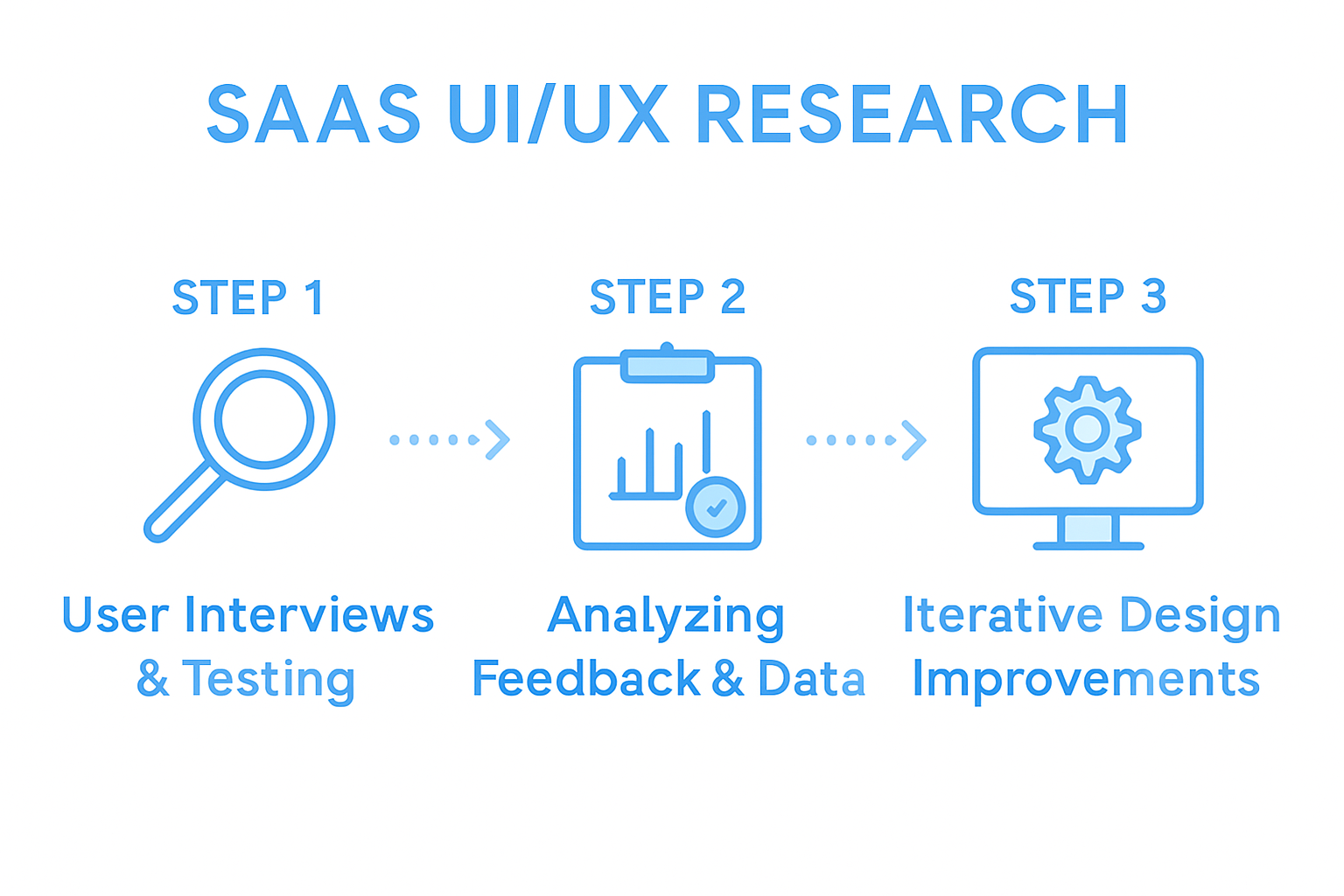
Successful research-driven UI and UX improvements require a holistic, iterative approach. This means continuously collecting user feedback, rapidly prototyping solutions, and measuring their impact through quantitative and qualitative metrics. The ultimate goal is not just to create visually appealing interfaces, but to develop digital experiences that feel so intuitive and seamless that users can accomplish their tasks with minimal cognitive effort. By embracing research as a core design principle, SaaS companies can transform their products from mere software tools into intelligent, adaptive solutions that genuinely understand and support user needs.
Common Mistakes: Misusing or Skipping Research
Research negligence represents one of the most critical pitfalls in SaaS product design, where teams mistakenly prioritize speed and assumptions over systematic user understanding. Many companies fall into the trap of designing products based on internal perspectives, developer intuitions, or outdated market assumptions, ultimately creating solutions that fail to resonate with actual user needs. This approach not only wastes development resources but can lead to product experiences that feel disconnected, frustrating, and fundamentally misaligned with user expectations.
Research design fundamentals highlight the critical importance of establishing structured methodologies that prevent common design research mistakes. Systematic research by design approaches demonstrate how structured processes can prevent critical errors in product development. The most prevalent mistakes include conducting superficial or biased research, relying on limited sample sizes, failing to validate initial hypotheses, and neglecting continuous user feedback loops.
Common research misuse often manifests through several predictable patterns. Some design teams cherry-pick data that confirms their existing beliefs, a phenomenon known as confirmation bias. Others conduct research so narrowly that it fails to capture the broader user context. Advantages of comprehensive UX research reveal that truly effective research requires multiple perspectives, diverse user segments, and a commitment to challenging internal assumptions. Skipping research phases or treating them as optional checkboxes instead of critical strategic inputs can lead to products that miss fundamental user needs.
Navigating research effectively requires a cultural shift within product development teams. Designers and developers must embrace research as a collaborative, iterative process rather than a one-time activity. This means creating feedback mechanisms that continuously capture user insights, maintaining openness to unexpected findings, and developing the humility to acknowledge when initial design assumptions are incorrect. Successful SaaS companies treat research not as a constraint, but as a powerful strategic tool that transforms potentially mediocre products into exceptional, user-driven solutions that genuinely solve real-world problems.
Unlock SaaS Success Through Research-Driven Design
The article highlights how neglecting research can lead to products that miss true user needs and suffer from disconnected user journeys and unclear positioning. If you are facing challenges like unprofessional interfaces, low user activation, or scattered product strategies, harnessing strategic design research is your path forward. By deeply understanding your users’ motivations and behaviors, you can turn guesswork into data-driven decisions that fuel seamless, intuitive experiences and measurable growth.
Ready to transform your SaaS product with expert research and design that drives activation and conversion? At The Good Side, we specialize in partnering with SaaS companies to elevate UI/UX, optimize user journeys, and clarify your positioning. Our flexible engagements allow you to start fast and scale as needed with senior designers who understand the SaaS landscape. Discover how our process — starting with a free design audit, rapid talent matching, and hands-on collaboration — can help your team create user-centered products that stand out and deliver real revenue impact. Explore our solutions at The Good Side and take the first step toward a cohesive, high-performing product today.
Frequently Asked Questions
What is the role of research in SaaS product design?
Research plays a crucial role in SaaS product design by providing strategic insights into user needs, behaviors, and pain points. It transforms intuitive design into a user-centered approach, ensuring that the final product aligns with user expectations and market demands.
How do qualitative and quantitative research methods differ in SaaS design?
Qualitative research focuses on understanding user motivations and behaviors through narrative-rich methods like interviews, while quantitative research relies on numerical data and measurable metrics to validate hypotheses and track performance indicators. Both methods together provide a comprehensive understanding of user needs.
What are some effective research techniques for SaaS design?
Effective research techniques for SaaS design include user persona development, journey mapping, usability testing, and iterative prototype evaluation. These methods enable designers to create products that solve user problems and anticipate future needs.
Why is it important to avoid skipping research in the design process?
Skipping research can lead to products that fail to resonate with actual user needs, resulting in wasted development resources and frustrating user experiences. Comprehensive research is essential for developing solutions that are truly user-driven and effective.
Recommended
- Why Use Design Research: Complete Guide for SaaS Teams | The Good Side Blog
- Why User Research Matters: Complete SaaS Guide | The Good Side Blog
- UX Research Explained: Driving SaaS Product Success | The Good Side Blog
- Design Thinking in SaaS: Complete Guide for Teams | The Good Side Blog
- Modern Insurance Platforms: What to look for - Digital Insurance Platform | IBSuite Insurance Software | Modern Insurance System